In which I wax eloquent on the social comparisons of the Cybermen to personal technology.
The greatest question in the universe: Doctor Who? This cultural icon has captured the world for the last 50 years. The stories it tells get better and better as they create complicated story arcs (the “Impossible Girl” anybody?), yet in terms of messages they seem to become more direct. To discuss this, I want to call up a particular episode from this seventh series: Nightmare in Silver.

First of all, some specs on the episode itself. Originally broadcast in May of 2013, this episode was well received by viewers, but wasn’t as kindly embraced by the media. Neil Gaiman, the well-known English graphic novelist, wrote this episode after the success of his first Doctor Who episode “The Doctor’s Wife” the season before. Gaiman is known for his fantastical, high-brow style of writing which made him a perfect fit for the Doctor Who universe. The fans of the show welcomed his youthful concepts and the revival of one of the Doctor’s most terrifying villains: Cybermen.
I’m going to be writing in a way that assumes that whoever is reading this has seen the episode and know about the convoluted story leading up to this particular plot. The show did air in May; however some U.S. residents are trying to catch up. So I’ll say this once.

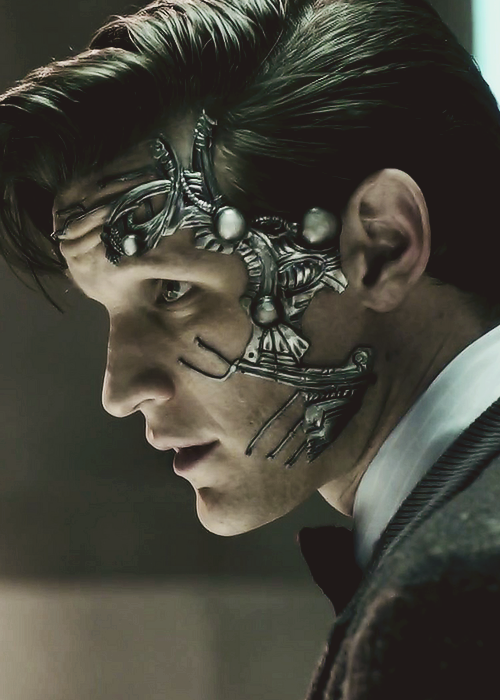
Let’s dive into this sea of wibley-wobley, timey-wimey, shall we? Nightmare in Silver in a nutshell is what happens when metal gets a mind of its own and wants to rebuild its Marxist empire. The Cybermen were supposedly “wiped out” about three or four times over the last fifty years of the show, like that bad penny they always show up. These mecha-suits are devoid of emotions and pretty much embody good ole’ communism. Everyone the same… everyone equal. Just like your old computer can be fixed, they upgraded through the ages. Not only upgrade their Ironman-esque suits - complete with an arc reactor in the chest -but now use human bodies as well (sort of a parasitic host that’s eerily Borg derivative from Star Trek).
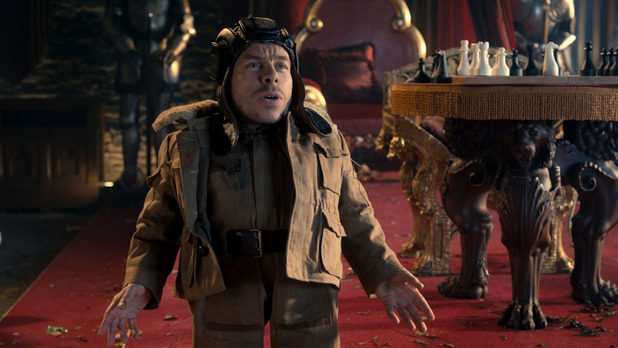
The Cyberiad has been gone for a thousand years at this point and a poor, dilapidated amusement park holds the shell of the last Cyberman (the 699th wonder of the universe). The owner shows the little rag tag group that he has made a charade of the shell, having a small person underneath controlling the arms. The audience sees this shell sitting there and immediately the quote from Ian Malcolm in Jurassic Park comes to mind, “Life finds a way.” Somehow you know that thing will come back to life. In typical sci-fi fashion, it does and then we get the hostile takeover. What’s interesting about this takeover is how similar it seems to the technological reality we all live and thrive in. The technology that was seemingly harmless and even profitable suddenly consumed the old proprietor, and the children along with it. This drains, essentially, their humanity. To simulate this, just give a thirteen year old girl an iPhone with headphones and try to carry on a conversation about perpetual motion. It’s like she’s not even there.

Let’s go back to the Communist vein and check the beliefs of the Cybermen. Back in 2006, one of the most talked about Cybermen episodes aired called “Doomsday,” in it the Cybermen make their creed.
“Cybermen will remove fear. Cybermen will remove sex, and class, and colour, and creed. You will become identical. You will become like us.”
If we know anything about the Communist regime in Russia, not all equals are equal. Some are given more than others; corruption is bound to occur. While that isn’t illustrated in this episode, it is implied and we as viewers know this to be an outcome thanks to history. Therefore, we start praying that the Doctor will somehow deliver them from the steely fists (pun most definitely intended) of the Cybermen.
What this all boils down to is the social and historical context of this episode. There are so many fighting against communism, yet every day we try to become more and more alike each other as we get similar phones, similar fashion styles, similar pay grades, similar rights, similar info all to become “equal.” Technology itself strives to make keep everyone on the same level. While this episode definitely has a few plot holes big enough for a truck to drive through, the message remains: your humanity is what makes you equal. Fight to have the heart and soul you were given, in the end that’s what will save the day. Then, when it comes to blowing up a planet, you too can be like Warwick Davis and make the compassionate decision to save the people and destroy the robots.
The Cybermen are what we will turn into if we dwell on Smart phones and internet and forget to live.


No comments:
Post a Comment