Gratuity in Servitude - By Megan Williams and Brandon Ostler
Listen to our Audio!
Artist Statement:
In this project, we decided we wanted to find something different and unconventional to document. There were many directions we could have taken, so we turned instead to our physicals needs. We wanted to document the college staple activity of hitting up the fast food restaurants for quick and easy access to food. Not necessarily healthy, but it hits the spot.
How is this creative, you might ask? We thought about the ideology of normal college students and tried to find a regular, yet still hidden process. Not many would think of a drive through as a high art, however as we conducted our recordings, we found ourselves flabbergasted at the amount of judgments we would make based on a simple voice in a box above the dollar menu. We decided to compare the different styles and deliveries that came from the different servers. There was a certain sort of commentary to be had on how gracious they were towards us as customers. There was a stereotype that most of them hate their jobs and are not very enthusiastic about what they do. We decided to approach it from another angle, a different objective. Instead of simply going for the food, we went in search of the service. Especially, noticing their behavior toward us. There is a tendency to just think of them as objects who deliver the food to us, but we began to see there were varying degrees in the individuality of these servers. For example, there was a particular server who seemed nervous and cautious about getting the right wording. It was assumed immediately that he was newer or took his job seriously by doing exactly what his manager had told him to. In contrast, another server seemed much more relaxed in his wording, treating the encounter like a conversation instead of a means to an end.
In our society today, everything demands instant gratification. We simply just want the product so we don't pay attention to the process of it's delivery. By ignoring these processes we not only stop ourselves from admiring the day to day but also lose respect for those who are performing the process. When we watched the video of Jack White creating a guitar, he made sure to put the focus on the process instead of the product. Though the product was the ultimate pay off, it was interesting to see the lead up and how he would accomplish it. In our little documentary, we wanted to draw attention to the human element of fast food. It's a very minute detail of picking up your late night tacos, but still a process that can be appreciated when seen in the right light.
Monday, September 30, 2013

Monday, September 23, 2013
Tiny Stories
#1
Emilio saw her first the day she died. Victoria saw him first the day she was born. The day they married was the fiftieth for both.

#2
Drowning, Chris saw his childhood nursery. With horror, he realized this was his fourth time reliving his life; once for every time he tasted death.

#3
I tripped on a stranger's foot.
"Hey, watch it!" I yelled.
"You can see me?" the stranger replied.

#4
Toby giggled at the dinosaur in front of him, turning the cogs to see it die then hatch again. Daddy would be livid if he was muddling with Cretaceous.

#5
She threw the throttle, punched the circuits, and sped toward the shimmering image of San Diego as the corsair chased the strange contraption labeled "SeaDoo."

This project has given me a chance to challenge myself in terms of storytelling. To limit yourself to a certain number of words forces you to choose only the most important details and put them together coherently. I noticed that my ideas at first were still way too big to fit into that small amount of space. Ideas can be simplified, honed down to the very essence of their message. Just like the Mormon message we watched in class, I needed to focus on the simple artful expression that came with brevity. They turned out pretty well in my opinion.
Emilio saw her first the day she died. Victoria saw him first the day she was born. The day they married was the fiftieth for both.

#2
Drowning, Chris saw his childhood nursery. With horror, he realized this was his fourth time reliving his life; once for every time he tasted death.

#3
I tripped on a stranger's foot.
"Hey, watch it!" I yelled.
"You can see me?" the stranger replied.

#4
Toby giggled at the dinosaur in front of him, turning the cogs to see it die then hatch again. Daddy would be livid if he was muddling with Cretaceous.

#5
She threw the throttle, punched the circuits, and sped toward the shimmering image of San Diego as the corsair chased the strange contraption labeled "SeaDoo."

This project has given me a chance to challenge myself in terms of storytelling. To limit yourself to a certain number of words forces you to choose only the most important details and put them together coherently. I noticed that my ideas at first were still way too big to fit into that small amount of space. Ideas can be simplified, honed down to the very essence of their message. Just like the Mormon message we watched in class, I needed to focus on the simple artful expression that came with brevity. They turned out pretty well in my opinion.
If you hadn’t guessed it, the
theme of this assemblage is “Meddling with Time.” There is a certain mystery
about time because it can’t be explored in the physical world, so it becomes a
creator’s sandbox. The first story is about a husband and wife who live their
lives opposite of each other. They’re living in different directions you see. I
made this picture with two clocks because of their opposing timelines.
The second story is a fear that
some people have brought to light: what if we’re living in a flashback of our
life after we’ve already died? The picture is of a man falling from his
drowning death into his childhood nursery, beginning his life over again for a
fourth time, but he always forgets until the moment he dies again. I wanted to
use the blues to feel like the nursery was swallowing him like the water.
The third story is about a time
traveling man who believes he can travel through time but not be seen. To
represent this story I wanted to convey a sense of “fish out of water” and made
him black and white while the background is an earthy tone. The image of the
eye represents those who can truly see him and therefore become important to
him just as he becomes important to them. A bit like how we form our
relationships today.
The fourth story is about a little
boy playing with his time traveling father’s watch (a pocket watch with no
numbers, just tick marks). I wanted this to be the son of the black and white
stranger. I also wondered where a child would want to go in the history of
time? I thought of my childhood love of dinosaurs. Time in the hands of a child
could be extremely dangerous, but still intriguing as to the insights of what
they believe time to be. Time feels relative to how long you’ve been on the
Earth, how do they feel it?
The fifth and final story was
inspired by a random idea of my drawing professor’s challenge. A jet ski time
machine. The only downside would be it could only travel through time on water.
I wanted to make this image seem like a painting was made of a peculiar incident
some crew member had to document. It doesn’t take a leave from Back to the
Future or Doctor Who time travel, but more creates a wormhole, something the
likes of StarGate would appreciate.
Monday, September 16, 2013
Musical Mosaic
 |
| First Impressions |
 |
| Curiosity |
 |
| Toe-Dipper |
 |
| Feel the Rhythm |
 |
| Taste the Beat |
 |
| Pounding in the Air |
 |
| Let It Out |
 |
| What's Next? |
Artist's Statement:
High Society is a big, brassy, bouncy tune that first attracted me with it's marching band themes and rat-a-tat rhythms. I love how it perfectly marries the sultry sounds of the muted trumpets and trombones with the ever pressing percussion.
As I approached this assignment I made myself sit down in a silent room, put my earphones in, close my eyes and focus on nothing but the music. I tried to picture the sounds as images, shapes, or colors. Immediately, the sounds of the snares at the beginning flashed white and staccato in front of my eyes. These white flashes became the dots used in all of my images, the pulsing underscore that the percussion gives to the music. As the trumpets began I saw flashes of blue and purple, sweeping swaths of color decorating the percussion with the hues. As the trombones, clarinets, and bass stepped in I saw splotches of green and yellow. Not the sickly hues, no these were vibrant and earthy. The more I listened, I noticed the trumpets bright sforzandos and the trombones' favorite glissandos and how they contrasted yet still complemented the melody, and harmonized perfectly. All of these elements coming together to build this "Creole Sound" that Louis Armstrong describes at the beginning.
After listening to the song, I stopped thinking about the individual elements and asked myself, "On the whole, what did you think of?" After a few long minutes of pondering, I found that it reminded me most of a child. A bouncy baby who is fascinated by anything and everything. Luckily, I happen to know of a particularly adorable specimen who has recently learned that the things around her have words and can be recognized by anyone. I photographed her during our play time and was able to get some great images that I felt tied directly into the song.
First Impressions - This is the first thing I did when I heard the song. The rhythm is in the repetitious white, with a few accents in purple. The gray line is the driving force behind the song. I felt it was taking us on a journey, and needed a sort of "yellow brick road" to guide us.
Curiosity - This is what I think is the start of the creative process in this little angel. There are two blank music staffs overlaid, signifying the potential we can see in her eyes. There is music to be made in the mind!
Toe- Dipper - This is representative of the band coming together for those first notes, creating rippling vibrations that we like to call music. I felt it parallel to taking the first step toward the journey. Notice the gray line again, leading on through the tapping foot and into the next image.
Feel the Rhythm - Children find rhythm in many unexpected ways. For example, she was watching " Be Our Guest" in Beauty and the Beast and was pretending to play the music on the back of her play keyboard. She found it by watching the movements of the characters as well as feeling it in the music. Louis Armstrong was nothing short of magical with his rhythms, especially during his improv pieces. You can see those rhythms in the white dots all over.
Taste the Beat - Those white flashes come back with a swatch of yellow, very faint but still an added layer of complexity to the sound. Children like to test things out with their mouths, and with this image I wanted to convey her trying to investigate the song by tasting it.
Pounding in the Air - This is a nod to the underlying baseline of this song. The thrumming bass that is sometimes hard to pick out under the percussion is shown in the golden rings, emanating from the little toes.
Let it Out - This image is the exact look of surprise when she accidentally took a picture of herself. Until this point, I had not used a flash. Being the little scientist, she pushed the button that both deployed the flash and snapped a picture at the same time. I felt it looked like she was letting out her own song that she'd been concocting to compete against the works of Alan Menken in order to keep and hold my attention. I drained the color but for those specific shapes to draw attention to the look in her eyes, the expression on her lips, and show a beautiful purple that to me is the sound of those trumpet solos getting louder and louder.
What's Next? - A marriage of all the elements. The song comes to a head as all the pieces in the band are executing complicated rhythms, swinging melodies, and the sense of wonderment and discovery that she exudes in this image. Her look of adventure and excitement made me wonder what she was conquering in her mind. Everyone has a goal, and always should have one.
As I listen to this piece, close your eyes, and try to see your potential. What can you do? After listening to this song, I turned that question into "What can't I do?"
Monday, September 9, 2013
A Nightmare in Smart
In which I wax eloquent on the social comparisons of the Cybermen to personal technology.
The greatest question in the universe: Doctor Who? This cultural icon has captured the world for the last 50 years. The stories it tells get better and better as they create complicated story arcs (the “Impossible Girl” anybody?), yet in terms of messages they seem to become more direct. To discuss this, I want to call up a particular episode from this seventh series: Nightmare in Silver.

First of all, some specs on the episode itself. Originally broadcast in May of 2013, this episode was well received by viewers, but wasn’t as kindly embraced by the media. Neil Gaiman, the well-known English graphic novelist, wrote this episode after the success of his first Doctor Who episode “The Doctor’s Wife” the season before. Gaiman is known for his fantastical, high-brow style of writing which made him a perfect fit for the Doctor Who universe. The fans of the show welcomed his youthful concepts and the revival of one of the Doctor’s most terrifying villains: Cybermen.
I’m going to be writing in a way that assumes that whoever is reading this has seen the episode and know about the convoluted story leading up to this particular plot. The show did air in May; however some U.S. residents are trying to catch up. So I’ll say this once.

Let’s dive into this sea of wibley-wobley, timey-wimey, shall we? Nightmare in Silver in a nutshell is what happens when metal gets a mind of its own and wants to rebuild its Marxist empire. The Cybermen were supposedly “wiped out” about three or four times over the last fifty years of the show, like that bad penny they always show up. These mecha-suits are devoid of emotions and pretty much embody good ole’ communism. Everyone the same… everyone equal. Just like your old computer can be fixed, they upgraded through the ages. Not only upgrade their Ironman-esque suits - complete with an arc reactor in the chest -but now use human bodies as well (sort of a parasitic host that’s eerily Borg derivative from Star Trek).
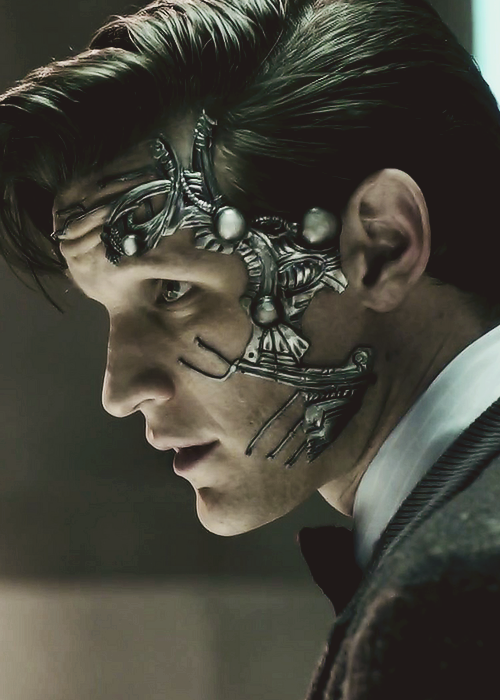
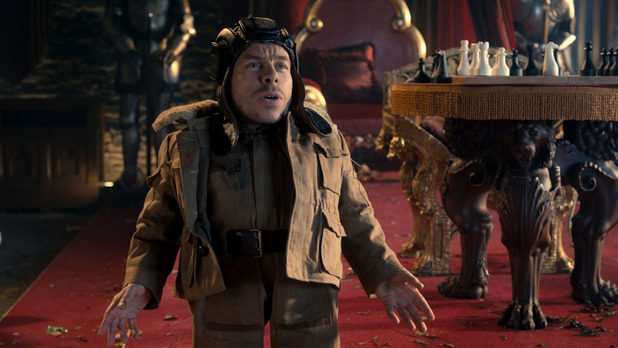
The Cyberiad has been gone for a thousand years at this point and a poor, dilapidated amusement park holds the shell of the last Cyberman (the 699th wonder of the universe). The owner shows the little rag tag group that he has made a charade of the shell, having a small person underneath controlling the arms. The audience sees this shell sitting there and immediately the quote from Ian Malcolm in Jurassic Park comes to mind, “Life finds a way.” Somehow you know that thing will come back to life. In typical sci-fi fashion, it does and then we get the hostile takeover. What’s interesting about this takeover is how similar it seems to the technological reality we all live and thrive in. The technology that was seemingly harmless and even profitable suddenly consumed the old proprietor, and the children along with it. This drains, essentially, their humanity. To simulate this, just give a thirteen year old girl an iPhone with headphones and try to carry on a conversation about perpetual motion. It’s like she’s not even there.


Let’s go back to the Communist vein and check the beliefs of the Cybermen. Back in 2006, one of the most talked about Cybermen episodes aired called “Doomsday,” in it the Cybermen make their creed.
“Cybermen will remove fear. Cybermen will remove sex, and class, and colour, and creed. You will become identical. You will become like us.”
If we know anything about the Communist regime in Russia, not all equals are equal. Some are given more than others; corruption is bound to occur. While that isn’t illustrated in this episode, it is implied and we as viewers know this to be an outcome thanks to history. Therefore, we start praying that the Doctor will somehow deliver them from the steely fists (pun most definitely intended) of the Cybermen.
What this all boils down to is the social and historical context of this episode. There are so many fighting against communism, yet every day we try to become more and more alike each other as we get similar phones, similar fashion styles, similar pay grades, similar rights, similar info all to become “equal.” Technology itself strives to make keep everyone on the same level. While this episode definitely has a few plot holes big enough for a truck to drive through, the message remains: your humanity is what makes you equal. Fight to have the heart and soul you were given, in the end that’s what will save the day. Then, when it comes to blowing up a planet, you too can be like Warwick Davis and make the compassionate decision to save the people and destroy the robots.
The Cybermen are what we will turn into if we dwell on Smart phones and internet and forget to live.
Wednesday, September 4, 2013
What do you do when you're stuck?
A rock and a hard place. You've heard of it. Some days it feels like I've put my personal residence there. It's never in a life threatening sense as the metaphor suggests, but intellectually, spiritually, or even creatively is where I'm trapped. Being stuck isn't the end of the world. It means the beginning of a new thought process, a new perspective, moving things in a new direction. I find that little extra push from everything around me, especially the people. They are the tender chorus to my mounting underscore. Just having the instruments of my mind is beautiful, but in order to truly appreciate the complexities of the music, you need those oohs and ahhs. That is how I feel right now, on the cusp of this new wave of swelling melodies and complex harmonies. Something's coming...
Tuesday, September 3, 2013
Life isn't simply good or bad...
To be perfectly fair, it's a lot of things so we mustn't confine it to a simple label of a "good life" or a "bad" one. Life comes at each of us as a huge ball of potential energy, just waiting to be realized in our hands. Sometimes there are good things, and sometimes there are bad. Each experience we have we throw into our pile of life. The good things don't always outshine the bad, and on the flip side the bad things don't necessarily tarnish the good. It's up to us to make sure that we are happy with our little pile and that it holds what is most precious to us: that which we love the most.
Subscribe to:
Comments (Atom)