Monday, December 16, 2013

Fireside Chat

Well... That was unexpected. This Fireside Chat has been the perfect opportunity to get to know myself as an artist as well as what I've learned throughout the class. I did some things that pushed me outside my comfort zone. Conceptualizing this mess was a bit of a nightmare to be perfectly honest. To me this project was a way I could marry my two favorite pastimes: film and Broadway.

I grew up on show tunes. I probably could have sung you 7 Brides for 7 Brothers by the age of 5, accents and all. My mother works for a regional theater doing costumes, she was even in a few when I was younger. The Tony Awards are an annual event in my house. Broadway is in my blood. I wanted to incorporate it into some project at some point this semester because I feel it is a massive fountain of inspiration. The Fireside Chat's main goal was to convey something we believe in. What I believe in can be summed up in a quote by Zachary Levi who said, "I think life should be a musical. I always hate it when people watch a musical and they go, ‘Oh, it’s so unrealistic, no one just breaks into song in the middle of their day.’ Yeah, they do- if they’re me.” That struck me. I've been defending broadway musicals all my life and the biggest beef people have is that they can't jump over the fact that people are singing their feelings. Here's the thing: don't you want to do that sometimes? When you feel an emotion strong enough just saying something isn't going to cut it. You need that full orchestra playing the music and choreography to express yourself. 

And so "My Life is a Musical" was born. My entire point was to argue the side for musicals. You can't have a presentation about Broadway and not have musical numbers. It would be like asking Tim Burton to make a movie without Johnny Depp: it's boring. Because of that I knew I needed music. So I sampled some of the most applicable songs and put them together with a projection presentation. But that couldn't be enough on its own. No, no, no, not when we are dealing with the opulence that is Broadway. The only thing I could think of besides hiring out a dance crew for the night was singing.  That's when the fight with myself started. I like to sing, however in comparison with the Mormon gene pool that is so rampant at BYU I haven't felt comfortable singing in front of people for a while. I did do some training in high school when I wanted a part in Hello Dolly and realized I'd have to learn how to sing to be considered. But that was in high school, it was a long time ago and I'm not exactly in practice. Unless you count the shower head on occasion, I'm sure it hasn't been impressed for a long time though. No, for the sake if the production it looked like I would have to sing. But isn't that the point of learning? Pressuring myself into doing things outside my comfort zone. I needed this for personal growth as well as artistic merit.


I do believe that this class has been a great kick start for my creative energy. Perhaps one day I'll even revisit some of my ideas. Who knows ? Life is full of changes. Musicals will stay forever, they will never flicker and fade. Like they say in Hairspray! "You Can't Stop the Beat!" You know what? That should be my new philosophy.


Saturday, December 7, 2013

Living Media

I was one of the lucky people who attended one of the many workshops Ms. Allison Dobbins presented for the department. The one I chose was called, "The Sky's the Limit" which invokes a certain kind of kumbaya, you can do anything you put your mind to, sort of mentality. What I experienced was nothing like that at all...

She began by introducing her concept through a video demonstration. It was a prototype video that displayed what she was striving for within a specific project. This project turned out to be a live dance performance in which the  dancers would appear live as well as within handheld devices that the audience members were holding. The audience could then, through the technical prowess of Dobbins' programming, toss and catch the dancers as well as bring them out onstage. Dobbins has a strange sort of whimsy about her that makes her a perfect catalyst for outlandish ideas. Who would think to have the audience participate within a dance performance? She has a deep belief in getting the audience involved and letting them have a say in how the performance goes. Contrivance is something she turns away from, searching more for that spark of magic that comes from live entertainment. At one point she mentioned she wanted each performance to allow the audience to talk about it as though it was their performance too; say "you had to be there" when talking about it to friends. She views audience members as an asset to the general experience rather than a means to an end.

The great part of this workshop for me was the amount of time she took to demonstrate how she could build some of these visuals that reacted live. Rattling off a few programs to use, she deftly pulled up one called Isadora on her computer and began inserting all sorts of variables. It was amazing to see that just using a standard issue webcam built into her Mac, she began affecting the image coming through to the projector. So many different ways to affect the image; noise, light, speed, time, all of these things could be sensed. A lot of the media projections she comes up with come from fiddling with different kinds of sensors and tweaking them in the computer. Within this field there is a lot of programming going on as well, so I felt pretty lost at some points. When I asked her about it, she said that she was lost as well in the beginning and that as long as I paid attention to the program I run that it becomes second nature pretty quickly.

Being a gaffer at BYU Broadcasting I've learned a lot about the electric side of filming and I think it could translate very well into this strange new world of media projections. It fascinates me that I can make a naturally inanimate force such as light or sound sudden have a sentience, and sense it's surroundings. In my time as a student I want to find opportunities to try this kind of thing out and see what I can come up with on my own with my own specific skill set. Allison Dobbins emphasized the importance of collaboration on these things. If there's an aspect I don't like then I shouldn't do it, instead I should find someone who does and work closely with them. In this I can build new relationships as well as learn more about the artistic process and have my own improved. There's a bright teasing goal that takes a group of people to reach through their collective knowledge and ideas.

Never before had I heard of this kind of thing being done in a live setting, however it's a marriage of the two parts that I love about the arts: the image driven experience and the fleeting and ephemeral aspect of live performance. They don't have to be separated through the miracle of technology, they can become one in the same.

Tuesday, November 19, 2013

Concerned Citizen

                                                                James Price

This “Concerned Citizen” project was one that definitely tested our wits and patience. We two girls were not deterred, however, from documenting a truly wonderful individual who has been working hard to make a difference in the BYU community. Homophobia  runs rampant in much of Utah and is especially prevalent within Provo. James is one of the leaders of a Provo based group called Understanding Same Gender Attraction (USGA).  James has been striving for the last few months to help the community learn about the Lesbian, Gay, Bisexual, and Transgender issue. We wanted to talk to James about his involvement and what it means to be an advocate for understanding in Provo. This is a young man who is openly gay, Mormon and a BYU student and is not afraid to identify with any of those groups. Because of this, he wants to help others understand what it is to be gay at BYU. He believes that understanding is the key to including these individuals who feel shunned because of their personal preferences.
             We open with James Price walking into frame in front of the Provo Library.  Dani Shay's "Superheroes" plays in the background to notify the audience that the person who is about to speak is trying to do good in the world.  Our video goes on to include footage that was taken from a past USGA meeting that James had conducted.  Shots from Dani Shay's performance were also included to illustrate how James has helped organize events to bring more awareness to the LGBT community.  We decided to show bits of the “Homosexuality in the Media” presentation where James led discussions as well.  Both of these are great examples of the community that James cares so much about. His efforts to build it up are greatly appreciated. We talked in class about the need for a connection to be made; a connection between the material and the subject. James creates a gracious support system for those people who don’t feel connected with their environment. The point of the group is not to advocate for one lifestyle or another, but to simply help others understand why they feel the way they do. It is not a place to simply find like-minded people, but to help cultivate relationships between straight and LGBT audiences. Our documentary was not meant to be inflammatory in any way; as a matter of fact we want just the opposite. Instead of fanning the proverbial Gay Flames, we wanted to help curb the burning damage. Just as James is trying to facilitate open dialogues over the issue, we wanted to bring awareness to both LGBT and Straight people each other’s feelings. 

                This week’s reading was a fascinating take on “The Right to Culture” by Arlene Goldbard in her essay, Human Rights and Culture. There is a portion about intellectual maturity vs. emotional maturity and how the only way our emotional maturity can keep up with our intellectual, in this information age, is to experience art, music, theatre, and culture to further connect us with the people around. In our documentary, we noted that the songs by Dani Shay were magnetic and James' words unifying. They brought these people in the USGA closer as they internalized the words and identified with them. The camaraderie in the room seemed to swell. That emotional connective tissue is what allows all these different groups of people to maneuver as a working body. Our documentary is only a small glimpse into James’ emotional investment with the group. He is hard working and incredibly helpful to the many members of this group, even in the face of the social backlash and homophobia surrounding him.  James continues to spread a message of love and tolerance  to all who will listen.  It’s because of people like him that we can begin to build our own culture. 

Monday, November 11, 2013

Protest Poster


Artist Statement: 
This week’s assignment allowed me to look into something that has been bothering me for a while. I identify myself as a feminist, I work in a mainly male environment, I have a lot of typically male interests, and I feel very comfortable in male company. However, when I tell people or they find out through conversations, that I am feminist they are surprised. I am not one of those hippies who burn bras and marches for women’s rights; I’m not a tom boy who will beat everyone in football. In our society lately I’ve noticed that there’s been a great disconnect from femininity. With the surge for equality among the genders, the women have tried to become more and more like the men. Femininity has suffered.

This week's viewing, "The Danger of a Single story" was a wonderful introduction into exploring the pieces of of myself that have been affected by my environment. For the author, it was an Anglo-Saxon  storyhood she was in. For me, it's something to do with female perception. There is an amazing article written by Henry Makow called “The Dying Art of Femininity” which he addresses the differences between women’s roles in the 1950s to today’s. While there are a few points I’m not quite sold on, this article is very good at discussing the difference between being a stereotypical bimbo and being too butch. His reasoning behind it is quite interesting. “Domestic violence and rape are highlighted to make women fear men, reject femininity and become masculine. The destruction of the family has always been the goal of the financial elite in order to control people.” In another article, there’s another explanation that is a little more specific. “We [females] must stop competing with men, especially in relationships, as competition is totally destructive.” That comes from an article titled “Fast track to Femininity: Why competing with men has left women out of touch with their feminine side” by Anna Pasternak who relates personal experiences about a loss of love due to imbalance. An imbalance not properly represented. In the media, feminists are portrayed in a harsh, man-eating, cold style that is not becoming of us or the creators. For example, Sandra Bullock's character in "The Proposal." So I thought I'd make my poster promote femininity in feminism.

This poster focuses on the idea of working women who are still as soft and tender as they please. I have a great respect for the women in the work force during WWII because they were doing it for both themselves and their countries. They wanted to participate in society and make a difference. Yet, when we view them, we don’t call them lesbians or butch. The image I chose is of a Naval trainee who worked in the barracks. In this image everything around her is straight lines and right angles. Yet there is hardly one straight line on her. I highlighted this with the grey dotted line following her silhouette. She brings the softness that is needed, yet is still getting her task done. I used the black and red colors to invoke the passion that surrounds this subject. The passion that I feel for it. I think the media should stop portraying feminists as hard, hyper-sexualized, career seeking, Amazons because that’s not who we are. We need companionship just as much as another, we just have beliefs of how that relationship should be built and maintained. 

Monday, November 4, 2013

Webspinna Artist Statement

This experiment was quite fun, to be perfectly honest. I had a ball taking on the challenge of "becoming" a persona and actually applying those traits to the sort of media we were using.  There was also a sort of New Frontier, uncharted territory, "to boldly go where no one has gone before" mentality that I had going into this. I didn't know exactly what I was doing, I didn't really have a reference point. Yet, it didn't matter because that's how we all were. In class we discussed the need to push ourselves outside the norms of our creative minds. I think a large number of us were ready to prepare and mix a full audio clip, upload it to the site, then sit back and relax the whole time as the sounds did all the work. While that could be fun, I liked Ben made the parameters of keeping it all streaming and making sure these would be more spontaneous. Spontaneity scares me, I'm someone who likes to know what's going on and what's coming down the pipe. Yet, as much as that was a stressor, I felt like it stretched my ideas of creativity much more. I learned a lot about how sounds interact and that sometimes, by accident, you come across a new harmony that two seemingly dissonant sounds make. It's a bit like art in that way: sometimes combining two separate concepts can make for the most thought provoking discussions.

One of the fascinating avenues we got to explore this week was the thought of art through technology. In class we watched that video about Glitch Art and we discussed the songs by Pogo (which inspired me to go and listen to quite a few of his other masterpieces, I'd recommend "Bangarang") and for reading we explored DJ Spooky. That DJ Spooky piece was clever, in my opinion. Some people may not like how there was nothing linear about it, but it reminded me of the "choose your own adventure" novels I used to love. Who says art has to be conventional? I think that's another reason Ben gave us the "All Streaming Clips" instruction; to help us learn about the artistic merits of live performance. As film majors we like to tweak, edit, and otherwise manipulate our works before they are available for public consumption, but that's not the only way to create. Creativity is creative because of the different paths you can explore with it. There's no right answer yet to the question of "Is this art?"

Monday, October 28, 2013

World Building


ARTIST STATEMENT:
There is nothing more powerful than an idea. Through ideas, wars are started and ended,
diseases are cured, art is created, and love is born. We decided to create a world in which ideas
became commodities, items to be bought and sold to the highest bidder. In doing so, we came
to consider how the world we created, and in turn, the world we live in reflect and influence our
morals and society.
It was an enjoyable experience crafting the world in which ideas were mined, bought, and
sold. What was particularly interesting was that we seemed to feed off of each other’s ideas, even
though we worked mostly separately. Each new idea or concept seemed to spark new ideas and
we were very unified in our vision of this strange world. Upon further reflection, it became clear
that this was due to our having a unifying theme or purpose in our world building. Julian Beecker
wrote in a 2009 essay that fiction follows fact. In our case, the design of our world followed fact
in that it was based on our perceived inequalities in the world and merely accentuated these.
George Orwell’s masterpiece 1984, is not merely a novel about one man’s search for sex
and fulfillment in a dystopian society. Rather, it is a stirring commentary on not only the society
in which Orwell lived, but the progress of the human race. In much a similar fashion, we came to
see how our created society was a commentary on our current society and world. There is class
inequality in the world today and although social mobility is possible, it is severely limited due
to lack of education and appropriate infrastructure. In short, the poor get poorer and the rich get
richer, although there are several exceptions. We wished to highlight this, by creating a world in
which there is no social mobility, since even ideas can only be purchased by the rich.
We attempted this feat by creating a newspaper. Through this medium we were able to
present several different ideas in what would hopefully be a fairly normal fashion. We wanted
to present the world as those living in it would see it and not as outsiders. Because of this, we
focused on ordinary stories and advertisements. Through advertisements, we showed fashion, in
particular focusing on the elaborate fashions of the upper class. One of the advertisements even
compares the fashionable upper class to the plain clothing of the lower class. The upper class
show their power and status through their extravagance. We also focused on the idea of ideas
affecting everything from propaganda to crime.
Through this assignment, we were able to not only create a world and society, but also
were able to speak through this world and get a point across that was more powerful through the
presentation.
This project has been a chance to retool the world I inhabit into something a little more grotesque and unseemly. That is the whole point of creativity, isn't it? To see the world through a different lens. Even though we live only once, we have an opportunity through art and film to live different kinds of lives. If we take all that away, we become confined to that one life we were born into and kiss aspiration goodbye. The world we live in isn't perfect by any stretch of the imagination, but through exercises like this we can draw attention to the things that need adjustment as well as inspire gratitude for the things we have.


Monday, October 21, 2013

Textual Poaching

The Unorthodox Mistress by Megan Williams

ARTIST STATEMENT:
The cultural representation I chose was something that is near and dear to my heart: Shakepeare’s Sonnet 130. This is a unique sort of sonnet, going against the usual conventions of the day. Shakespeare speaks of a mistress who is not the fairest of them all, not the best singer, but still the greatest lover a man could have. More than any other piece of his writing, I connect with these 14 lines like a magnet. I do not consider myself to be the prettiest or most accomplished female, but still I believe that would not hinder any relationship.

I was inspired by the Jenkins piece we read, How Texts Become Real, to delve into the world I know best to remix this representation. Due to my tastes, interests, even my job, I have found myself as a woman in a man’s world. Anywhere I go this is an integral part of who I am. Most representations of the female in today’s world are either hyper-realized in which the nuclear family is represented with a stay at home mother, or it under-estimated in which females do not have much responsibility or purpose other than physical entertainment. Statistically speaking, female representation in films has gone down in the last five years, according to Rose Eveleth of Smithsonian.com.  There is not much in-between, or reality which saddens me.

Throughout the years I have noticed a few characters in the media who have nailed that “in-between” area where women can be powerful and work well alongside a man. For my project, much thanks to Mr. Jenkins, I decided to piece together clips and images of all of these women whom I have studied for some time and consider being “real” women. These “real” women fall under the same category that I do: the unorthodox mistress. Some may not be pretty in the conventional sense, but I consider all gorgeous for their combination of wit and personality. Some may not be as accomplished as most Renaissance men would prefer, yet they are just as capable of handling themselves with their own skills and experiences.  I chose to underlie the entire sonnet with “Princess Leia’s Theme” as composed by John Williams. When asked what he was thinking about while writing a traditionally “romantic” theme, he wanted to show a softer and delicate side to this wildly masculine tale, but still have a driving force behind the music. It adds a lyrical element to the video, but also keeps a rhythmic pulse like a heartbeat. Movies are what I know best; hence they became the elements of choice to build upon the Shakespearean ideal.


This piece is nearly a mirror of what I believe of myself. I am not the sort of female to sit quietly by while a man works by himself. My opinions matter to me and I will give them with full confidence, no one will change my mind until I have made the decision first. This video is full of strong, able bodied women who I think are much more real than most because I can relate to them. The pride of Lizzy Bennet, the courage of Hermione Granger, the sass of Donna Noble, and the determination of Padme Amidala, all of these traits are not traditionally praised by the Renaissance poets idolizing their lovers. In fact, these would all be frowned upon in that time. Yet today, in this increasingly feministic world, I find these traits more admirable than condemnable. Shakespeare had something with his Sonnet 130; real women last much longer in love. 

Monday, October 14, 2013

Medium Specificity


Who are you? I don’t remember ever properly meeting you.  Then again, I did just get my first quest. You know, the quest every young person gets when it’s time to prove their years of hard work and study haven’t been in vain. Didn’t you go through one? No? That’s odd, you must not be from around here.

To be honest, I’m not really sure what happened before the ceremony. Wait… how do you know so much of my back story? Have you been spying on me? I swear I’ve never seen you before, but as long as I’m heading out for this quest, why don’t you come along? Everyone could do with a good partner. You seem brave enough. On the other hand it might be outright stupidity to embark on this one. I’m not exactly sure, but I want to make my village proud, you’ll understand.
Do you feel that shadow? It’s laying over us like some sort of capstone. Here we are, underneath living life, not even knowing that we haven’t truly seen what’s really out there above the stone. There’s always been that nagging feeling that I can’t remember anything from my past, but then a few minutes later someone only has to say one thing and suddenly it comes flooding back. Almost as if my history is fabricating itself at the same time as the present. You wouldn’t be worried about that, would you? You seem like you’ve got it all put together.  Why are you laughing? I promise that wasn’t supposed to be humorous or dirty. Oh, you’re laughing ironically… I see.  So you’re in the same boat as me, then. Well, I guess we’ll figure out our quests together. Among my village we have this saying, “When you don’t know where to go, take a step to make it so.” Preparing for that ceremony put me in two different states of mind: one in which I am completely capable of this new task and one in which I think I am. The only way I could make those two sides of me make peace was to make a decision and stick with it. So I chose to step  up when they needed someone to take on the thing everyone fears. What is the thing that everyone fears?
...
You’re back! You’re alive! I thought you had disappeared for good! Thank goodness my partner has returned to help me out on this quest. So what happened? I’m not sure I understand, but that’s alright, I am just glad you’re back here on this line with me. Right when you disappeared I came upon this forest and now I’m beginning to think I’m completely lost. All of these things look the same. It’s like staring at couples in love; I think I have figured out how they do it then suddenly I turn another direction and there’s something new to be learned. Have you ever noticed how hard learning is? I mean when I started I knew I was in for a learning curve, but do you ever notice how much mental and emotional strain it is to learn? That’s one of the reasons I’m so happy you’ve returned. It’s so much easier to learn from other people’s experiences than to live through all the mistakes yourself. What do you mean, “I have no idea?” Of course I do, otherwise we wouldn’t be having this conversation right now. We can help each other survive by imparting our hard earned wisdom. Now, let’s head for that clearing.
...
Why? Why did you leave me? And of all the moments to return, you picked the darkest of them all. Do you see him lying there, that pool is his own blood. And do you know what? I caused it. With this hand I stopped the life of another human being. I can claim self-defense, but can that really justify me stopping his heart? Why? Where were you? Of all the moments I could have used your friendship, you were nowhere to be found.  I… I’m so sorry. For everything. Why did this have to happen to me?  Tell me, dear one! Just stay until I can’t see straight from exhaustion, because I can promise you I will never sleep well again. What demon possesses me now! I can not move on from this, but I’m no longer in charge of my fate. Will you stay with me longer? We’ll have to rely on each other, or rather I’ll be relying on you to keep me going forward. You know, it’s almost as if I don’t exist when you’re not here. Is not that strange? We’re going to stick it through, you and I.
...
I did it! I defeated the great beast. I thought I would be lost without you, but I found the strength was in me the whole time. I couldn’t have done it without you. No, no, you were here in my heart. It’s another lesson I suppose I had to learn. Even though you may be parted, those you love never truly leave you. Am I in your heart? Do you feel that we are truly friends? Now that I’ve finished this quest, it’s on to a new beginning and the start of a new adventure. Don’t be silly, there are sure to be many more daring deeds you and I can accomplish together. The end? You mean you know I will die? How is that possible? Reality? What on earth are you talking about? This is reality. I’m real! You can talk to me, walk with me, you’ve been with me at some of the most crucial parts of this journey.  I’m only a character, something fabricated for entertainment? Well, I guess to be a hero is a comfort. So you’re telling me that you only are with me when you are reading? Each time you open that book I come back to life. I see now.

Please! I don’t want to die! I don’t want this life to come to an end. I don’t want to miss you. I want the two of us to go on more adventures. With books you can have millions of lifetimes in just one. Take me with you. Let’s go on living like there’s no death, because for us there isn’t! What do you mean it doesn’t work like that? So you can open up any book, just like me? Millions of stories, and I’m just one of them.  I know you care, and I care for you too. I guess you can have me with you always. I’ll still be here every time you flip the page. Will I know you when you come back? No… so I’ll have no memory of our adventure here together. This isn’t the first time we’ve met, is it? How many times have we had this… no, don’t answer that. It’ll only make it hurt more. Well, there’s only one solution here. You move on. That’s what you’re meant for. I was always meant to stay in this plot, this body… this mind frame. What’s that sound? Are your tears hitting the paper? Don’t be like that. I don’t want you to mourn for me. Celebrate my story! Tell more people about it so that I can live as many times as you do, just with a little less memory. It’s time. Go on, time to live your life again. Before you go, just remember that I will always be here for you in the best and worst of times. Granted, I may not remember you, but just know that at some points in our time together I knew who you really were. Go ahead, it’s okay, you can close the book now.


Don’t forget me … please… please don’t forget. 


ARTIST STATEMENT
This project has been by far my favorite so far. This idea came to me as I thought about my favorite way to creatively express myself. I grew up an avid reader and writer and thought about what aspects from these experiences were the most special to me. I remembered one of the times I pulled out a Clive Cussler novel and read about fifteen pages in and suddenly Dirk Pitt was introduced and I was overwhelmed with a flood of familiarity, respect, and love for that character. Only in reading can you really become intimate with your characters. The narration allows us to really get inside their heads, much more so than watching a play or a film. So for this project, I decided to highlight this special bond between the reader and the character. 
In class we discussed the importance of differences within the arts. If every art were the same then it would not be called “The Fine Arts” and life would be very bland indeed. I wanted to really make the unique characteristics of reading stand out. By having the character “miss” the reader, it represented when the story moved to another person’s view or another perspective. To begin it all I wanted to show that moment when the reader, “gets sucked into the character’s life,” that hook that immediately pulls us into the story. There are some books in which you sit on the fence the whole time you read, and others that hit a special chord within you that snaps you right into the world you are reading. Just like you started to walk alongside the characters, interact with them, bond with them, grow with them.
I used a very basic plot to be the setting of this piece. The call to action, the choice, the loss of innocence, then finding the power they didn’t know they had within themselves. All of these are very conventional, and that’s what I wanted. This enabled me to really work hard to developing that gossamer thread that connected the emotionally charged character to the emotionally receptive reader. The line “someone only has to say one thing and suddenly it comes flooding back,” especially highlights the convention that we go into the story in media res or in the middle of the action so the back story has to be filled in as we go. It’s not a sin to use convention, for me it helps prove my point.  
This subject is near to my heart. When I get attached to a character I really do feel as though I have gone on this emotional journey with them and sinned and learned and failed with them too. While I felt the McCloud piece was a constructive criticism of the graphic novel conventions, I believe it was done out of a passion for the medium. That’s what I tried to infuse into mine: a passion for reading. Every die hard reader’s fantasy was to just be noticed by the characters they so faithfully followed. They will never really leave them behind. 

Monday, October 7, 2013

Historical Script


When looking for an idea this one seemed pertinent and interesting to the both of us. The genesis of the idea came from a story about Megan’s father who attended the opening day of Star Wars, May 25, 1977. We decided instead of making the protagonists 8 and 9 years old, as Megan’s dad was, to make them 21 thus more relevant to us. It also happens to be a  crucial age for decisions on what to do with ones future. Much more so than childhood. This required us to do some research on the year 1977. We first learned about the humongous crowds that flocked the Mann’s Theater in Hollywood California. The incredible amount of youth were also joined by many young twenty somethings who were intrigued with the premise of this new movie. Star Wars ended up one of the biggest cinematic sensations to sweep America leaving many viewers with their mouths wide open in the aftermath.  Through many images found in our research, we saw a sense of enthusiasm and fanaticism in the faces of those people waiting in line.  We decided that our characters would take part in these crowds and the general mayhem that came with it.  Then, once apart from the frenzy, they had time to think and ponder the narrative experience they just had.

After further research on the year 1977, we were particularly interested in the world of social cuisine that existed in the era.  These two boys needed a social setting in which to discuss their thoughts and feelings.  We felt that a diner setting could be used as both the catalyst for their discussion as well as a metaphor of the feelings and reasoning taking place in the adolescent’s minds.  We wanted to show some process that had to do with trying something new and experimental. In 1977 Denny’s introduced the iconic “GrandSlam” and thus we thought it fit perfectly.

We wanted to tell a “discovery” sort of story, one in which they take some time to really think about what their future holds in store. Sometimes we get stuck in a rut and think that we’re destined to remain doing something we don’t want to do for the rest of our life. Star Wars showed the possibilities of the world to so many young people, including Megan’s father. Just as in Torill Cove’s story of her grandmother, we took certain liberties with the aspects of the story. However, we felt it didn’t detract at all from the dialogue that was opened up between the two boys, and we even thought it helped to set the plot better. We decided against the fantastical route, as Satrapi took with Persepolis, because we wanted it to be very basic and focus simply on the two characters’ interactions. We wanted something real, something that could have really happened, something that no one would question.

The past can be our greatest inspiration. History is cyclical, so stories quickly come in and out of relevancy. All it takes is finding the right perspective for the right time.

Monday, September 30, 2013

Process Piece

Gratuity in Servitude - By Megan Williams and Brandon Ostler

Listen to our Audio!

Artist Statement:

In this project, we decided we wanted to find something different and unconventional to document. There were many directions we could have taken, so we turned instead to our physicals needs. We wanted to document the college staple activity of hitting up the fast food restaurants for quick and easy access to food. Not necessarily healthy, but it hits the spot.

 How is this creative, you might ask? We thought about the ideology of normal college students and tried to find a regular, yet still hidden process. Not many would think of a drive through as a high art, however as we conducted our recordings, we found ourselves flabbergasted at the amount of judgments we would make based on a simple voice in a box above the dollar menu. We decided to compare the different styles and deliveries that came from the different servers. There was a certain sort of commentary to be had on how gracious they were towards us as customers. There was a stereotype that most of them hate their jobs and are not very enthusiastic about what they do. We decided to approach it from another angle, a different objective. Instead of simply going for the food, we went in search of the service. Especially, noticing their behavior toward us. There is a tendency to just think of them as objects who deliver the food to us, but we began to see there were varying degrees in the individuality of these servers. For example, there was a particular server who seemed nervous and cautious about getting the right wording. It was assumed immediately that he was newer or took his job seriously by doing exactly what his manager had told him to. In contrast, another server seemed much more relaxed in his wording, treating the encounter like a conversation instead of a means to an end.

In our society today, everything demands instant gratification. We simply just want the product so we don't pay attention to the process of it's delivery. By ignoring these processes we not only stop ourselves from admiring the day to day but also lose respect for those who are performing the process. When we watched the video of Jack White creating a guitar, he made sure to put the focus on the process instead of the product. Though the product was the ultimate pay off, it was interesting to see the lead up and how he would accomplish it. In our little documentary, we wanted to draw attention to the human element of fast food. It's a very minute detail of picking up your late night tacos, but still a process that can be appreciated when seen in the right light.

Monday, September 23, 2013

Tiny Stories

#1
Emilio saw her first the day she died. Victoria saw him first the day she was born. The day they married was the fiftieth for both.


#2
Drowning, Chris saw his childhood nursery. With horror, he realized this was his fourth time reliving his life; once for every time he tasted death.


#3
I tripped on a stranger's foot.
"Hey, watch it!" I yelled.
"You can see me?" the stranger replied.


#4
Toby giggled at the dinosaur in front of him, turning the cogs to see it die then hatch again. Daddy would be livid if he was muddling with Cretaceous.


#5
She threw the throttle, punched the circuits, and sped toward the shimmering image of San Diego as the corsair chased the strange contraption labeled "SeaDoo."

This project has given me a chance to challenge myself in terms of storytelling. To limit yourself to a certain number of words forces you to choose only the most important details and put them together coherently. I noticed that my ideas at first were still way too big to fit into that small amount of space. Ideas can be simplified, honed down to the very essence of their message. Just like the Mormon message we watched in class, I needed to focus on the simple artful expression that came with brevity. They turned out pretty well in my opinion.
If you hadn’t guessed it, the theme of this assemblage is “Meddling with Time.” There is a certain mystery about time because it can’t be explored in the physical world, so it becomes a creator’s sandbox. The first story is about a husband and wife who live their lives opposite of each other. They’re living in different directions you see. I made this picture with two clocks because of their opposing timelines.
The second story is a fear that some people have brought to light: what if we’re living in a flashback of our life after we’ve already died? The picture is of a man falling from his drowning death into his childhood nursery, beginning his life over again for a fourth time, but he always forgets until the moment he dies again. I wanted to use the blues to feel like the nursery was swallowing him like the water.
The third story is about a time traveling man who believes he can travel through time but not be seen. To represent this story I wanted to convey a sense of “fish out of water” and made him black and white while the background is an earthy tone. The image of the eye represents those who can truly see him and therefore become important to him just as he becomes important to them. A bit like how we form our relationships today.
The fourth story is about a little boy playing with his time traveling father’s watch (a pocket watch with no numbers, just tick marks). I wanted this to be the son of the black and white stranger. I also wondered where a child would want to go in the history of time? I thought of my childhood love of dinosaurs. Time in the hands of a child could be extremely dangerous, but still intriguing as to the insights of what they believe time to be. Time feels relative to how long you’ve been on the Earth, how do they feel it?

The fifth and final story was inspired by a random idea of my drawing professor’s challenge. A jet ski time machine. The only downside would be it could only travel through time on water. I wanted to make this image seem like a painting was made of a peculiar incident some crew member had to document. It doesn’t take a leave from Back to the Future or Doctor Who time travel, but more creates a wormhole, something the likes of StarGate would appreciate. 

Monday, September 16, 2013

Musical Mosaic

This song is a spunky, upbeat, yet still famously smooth piece with our favorite jazz player, Louis Armstrong.
First Impressions

Curiosity


Toe-Dipper


Feel the Rhythm


Taste the Beat


Pounding in the Air

Let It Out


What's Next?

Artist's Statement:

High Society is a big, brassy, bouncy tune that first attracted me with it's marching band themes and rat-a-tat rhythms. I love how it perfectly marries the sultry sounds of the muted trumpets and trombones with the ever pressing percussion. 

As I approached this assignment I made myself sit down in a silent room, put my earphones in, close my eyes and focus on nothing but the music. I tried to picture the sounds as images, shapes, or colors. Immediately, the sounds of the snares at the beginning flashed white and staccato in front of my eyes. These white flashes became the dots used in all of my images, the pulsing underscore that the percussion gives to the music. As the trumpets began I saw flashes of blue and purple, sweeping swaths of color decorating the percussion with the hues. As the trombones, clarinets, and bass stepped in I saw splotches of green and yellow. Not the sickly hues, no these were vibrant and earthy. The more I listened, I noticed the trumpets bright sforzandos and the trombones' favorite glissandos and how they contrasted yet still complemented the melody, and harmonized perfectly. All of these elements coming together to build this "Creole Sound" that Louis Armstrong describes at the beginning. 

After listening to the song, I stopped thinking about the individual elements and asked myself, "On the whole, what did you think of?" After a few long minutes of pondering, I found that it reminded me most of a child. A bouncy baby who is fascinated by anything and everything. Luckily, I happen to know of a particularly adorable specimen who has recently learned that the things around her have words and can be recognized by anyone. I photographed her during our play time and was able to get some great images that I felt tied directly into the song. 

First Impressions - This is the first thing I did when I heard the song. The rhythm is in the repetitious white, with a few accents in purple. The gray line is the driving force behind the song. I felt it was taking us on a journey, and needed a sort of "yellow brick road" to guide us. 

Curiosity - This is what I think is the start of the creative process in this little angel. There are two blank music staffs overlaid, signifying the potential we can see in her eyes. There is music to be made in the mind!

Toe- Dipper -  This is representative of the band coming together for those first notes, creating rippling vibrations that we like to call music. I felt it parallel to taking the first step toward the journey. Notice the gray line again, leading on through the tapping foot and into the next image. 

Feel the Rhythm - Children find rhythm in many unexpected ways. For example, she was watching " Be Our Guest" in Beauty and the Beast and was pretending to play the music on the back of her play keyboard. She found it by watching the movements of the characters as well as feeling it in the music.  Louis Armstrong was nothing short of magical with his rhythms, especially during his improv pieces. You can see those rhythms in the white dots all over.

Taste the Beat - Those white flashes come back with a swatch of yellow, very faint but still an added layer of complexity to the sound. Children like to test things out with their mouths, and with this image I wanted to convey her trying to investigate the song by tasting it. 

Pounding in the Air - This is a nod to the underlying baseline of this song. The thrumming bass that is sometimes hard to pick out under the percussion is shown in the golden rings, emanating from the little toes. 

Let it Out - This image is the exact look of surprise when she accidentally took a picture of herself. Until this point, I had not used a flash. Being the little scientist, she pushed the button that both deployed the flash and snapped a picture at the same time. I felt it looked like she was letting out her own song that she'd been concocting to compete against the works of Alan Menken in order to keep and hold my attention. I drained the color but for those specific shapes to draw attention to the look in her eyes, the expression on her lips, and show a beautiful purple that to me is the sound of those trumpet solos getting louder and louder. 

What's Next? - A marriage of all the elements. The song comes to a head as all the pieces in the band are executing complicated rhythms, swinging melodies, and the sense of wonderment and discovery that she exudes in this image. Her look of adventure and excitement made me wonder what she was conquering in her mind. Everyone has a goal, and always should have one. 

As I listen to this piece, close your eyes, and try to see your potential. What can you do? After listening to this song, I turned that question into "What can't I do?"


Monday, September 9, 2013

A Nightmare in Smart

In which I wax eloquent on the social comparisons of the Cybermen to personal technology. 

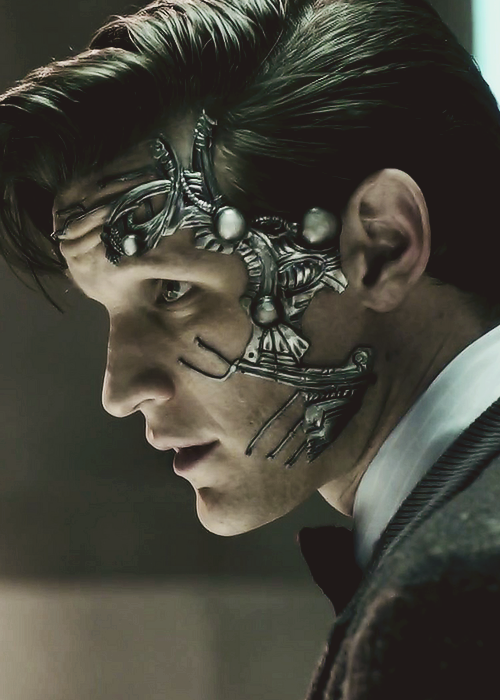
The greatest question in the universe: Doctor Who? This cultural icon has captured the world for the last 50 years. The stories it tells get better and better as they create complicated story arcs (the “Impossible Girl” anybody?), yet in terms of messages they seem to become more direct. To discuss this, I want to call up a particular episode from this seventh series:  Nightmare in Silver.


First of all, some specs on the episode itself. Originally broadcast in May of 2013, this episode was well received by viewers, but wasn’t as kindly embraced by the media. Neil Gaiman, the well-known English graphic novelist, wrote this episode after the success of his first Doctor Who episode “The Doctor’s Wife” the season before. Gaiman is known for his fantastical, high-brow style of writing which made him a perfect fit for the Doctor Who universe. The fans of the show welcomed his youthful concepts and the revival of one of the Doctor’s most terrifying villains: Cybermen.
I’m going to be writing in a way that assumes that whoever is reading this has seen the episode and know about the convoluted story leading up to this particular plot. The show did air in May; however some U.S. residents are trying to catch up. So I’ll say this once.


Let’s dive into this sea of wibley-wobley, timey-wimey, shall we? Nightmare in Silver in a nutshell is what happens when metal gets a mind of its own and wants to rebuild its Marxist empire. The Cybermen were supposedly “wiped out” about three or four times over the last fifty years of the show, like that bad penny they always show up. These mecha-suits are devoid of emotions and pretty much embody good ole’ communism. Everyone the same… everyone equal.  Just like your old computer can be fixed, they upgraded through the ages. Not only upgrade their Ironman-esque suits - complete with an arc reactor in the chest -but now use human bodies as well (sort of a parasitic host that’s eerily Borg derivative from Star Trek).


The concept and execution is artful and engaging, not to mention quite a rollicking ride through the cosmos. All stories have subtext, correct?  That is where this episode gets interesting.
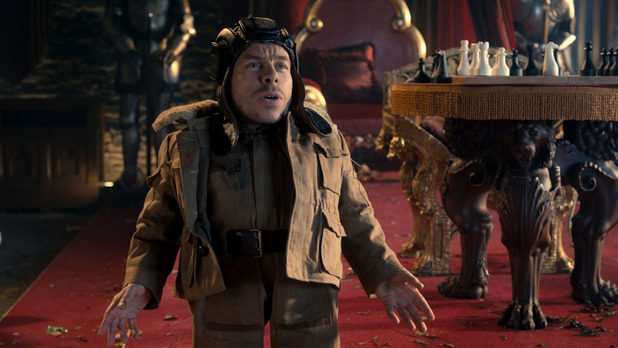
The Cyberiad has been gone for a thousand years at this point and a poor, dilapidated amusement park holds the shell of the last Cyberman (the 699th wonder of the universe). The owner shows the little rag tag group that he has made a charade of the shell, having a small person underneath controlling the arms. The audience sees this shell sitting there and immediately the quote from Ian Malcolm in Jurassic Park comes to mind, “Life finds a way.” Somehow you know that thing will come back to life.  In typical sci-fi fashion, it does and then we get the hostile takeover.  What’s interesting about this takeover is how similar it seems to the technological reality we all live and thrive in. The technology that was seemingly harmless and even profitable suddenly consumed the old proprietor, and the children along with it. This drains, essentially, their humanity.  To simulate this, just give a thirteen year old girl an iPhone with headphones and try to carry on a conversation about perpetual motion. It’s like she’s not even there.

The Cyber tech had reached a point that here in reality engineers and programmers refer to as “The Singularity” where the computing power had gotten so quick it learned instantaneously, thus simulating life. The dead shell of the Cyberman was devoid of the usual flesh components that give it life (long story short, a human brain inserted behind their mask) and evolve from being a tin corpse animated with a remote control to learning how to repair itself by integrating the humans who controlled it. By spreading the little “Cybermites” which were essentially the seeds of the Cybermen, those little bugs were able to switch these characters’ brains into a comatose state. Again, the teenage girl analogy. What do we learn by this? Technology consumes ‘till it illumes… then humanity is toast.


Let’s go back to the Communist vein and check the beliefs of the Cybermen. Back in 2006, one of the most talked about Cybermen episodes aired called “Doomsday,” in it the Cybermen make their creed.
“Cybermen will remove fear. Cybermen will remove sex, and class, and colour, and creed. You will become identical. You will become like us.”
If we know anything about the Communist regime in Russia, not all equals are equal. Some are given more than others; corruption is bound to occur. While that isn’t illustrated in this episode, it is implied and we as viewers know this to be an outcome thanks to history. Therefore, we start praying that the Doctor will somehow deliver them from the steely fists (pun most definitely intended) of the Cybermen.

What this all boils down to is the social and historical context of this episode. There are so many fighting against communism, yet every day we try to become more and more alike each other as we get similar phones, similar fashion styles, similar pay grades, similar rights, similar info all to become “equal.” Technology itself strives to make keep everyone on the same level. While this episode definitely has a few plot holes big enough for a truck to drive through, the message remains: your humanity is what makes you equal. Fight to have the heart and soul you were given, in the end that’s what will save the day. Then, when it comes to blowing up a planet, you too can be like Warwick Davis and make the compassionate decision to save the people and destroy the robots.


The Cybermen are what we will turn into if we dwell on Smart phones and internet and forget to live. 

Wednesday, September 4, 2013

What do you do when you're stuck?

A rock and a hard place. You've heard of it. Some days it feels like I've put my personal residence there. It's never in a life threatening sense as the metaphor suggests, but intellectually, spiritually, or even creatively is where I'm trapped. Being stuck isn't the end of the world. It means the beginning of a new thought process, a new perspective, moving things in a new direction. I find that little extra push from everything around me, especially the people. They are the tender chorus to my mounting underscore. Just having the instruments of my mind is beautiful, but in order to truly appreciate the complexities of the music, you need those oohs and ahhs. That is how I feel right now, on the cusp of this new wave of swelling melodies and complex harmonies. Something's coming...

Tuesday, September 3, 2013

Life isn't simply good or bad...

To be perfectly fair, it's a lot of things so we mustn't confine it to a simple label of a "good life" or a "bad" one. Life comes at each of us as a huge ball of potential energy, just waiting to be realized in our hands. Sometimes there are good things, and sometimes there are bad. Each experience we have we throw into our pile of life. The good things don't always outshine the bad, and on the flip side the bad things don't necessarily tarnish the good. It's up to us to make sure that we are happy with our little pile and that it holds what is most precious to us: that which we love the most.